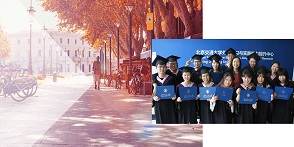
Delegation from School Visits Three Universities in Nanjing for Research Exchange(2025-5-16)(1)

Delegation from School Visits Three Universities in Nanjing for Research and Exchange

In a strategic move to formulate the 15th Five-Year Plan of the School of Languages and Communication Studies, Beijing Jiaotong University and explore innovative pathways for disciplinary development, a delegation led by Sun Wenbo, Secretary of the School's Party Committee, conducted a specialized research visit to Southeast University, Nanjing University of Posts and Telecommunications, and Nanjing University of Aeronautics and Astronautics on May 12-13. The delegation engaged in in-depth exchanges with the foreign language schools of these institutions, focusing on key areas such as optimization of disciplinary programs, scientific research innovation, and Party building integration. The delegation also included Hao Yunhui, Vice Dean of the School; Zuo Yingjuan, Associate Director of the Department of English Language Teaching; and Li Beier, Associate Chair of the Department of European and Asian Languages.

Regarding disciplinary development, the delegation gained detailed insights into the innovative practices of integrating foreign language disciplines with each university's distinctive strengths. Particular attention was paid to Southeast University's unique programs like "English + Information Engineering" and "Japanese + Electronic Science and Technology"; Nanjing University of Posts and Telecommunications' approach of incorporating information and communication technology into its foreign language talent cultivation system; and Nanjing University of Aeronautics and Astronautics' specialized development path in neurocognitive research within foreign language studies. These institutions' initiatives to actively expand into emerging fields while maintaining the core characteristics of foreign language disciplines provided valuable references for optimizing our school's disciplinary structure. In the area of college English teaching, the delegation systematically gathered experiences on how these universities support the development of their "Double First-Class" initiatives, including the construction of English curriculum systems, placement testing mechanisms, and the formulation of training programs. In terms of scientific research innovation, the successful experiences of these universities in continuously strengthening faculty development, promoting organized research, and cultivating national-level projects offered new perspectives for improving our school's research organization and incentive mechanisms. Regarding digital empowerment in teaching, the experiences shared in building smart teaching platforms, developing digital resources, and integrating artificial intelligence throughout the educational process provided technical references for advancing teaching reform at our school. The delegation also specifically studied these institutions' characteristic approaches to integrating Party building with disciplinary development, offering valuable insights for our school's efforts in promoting high-quality integration of Party building with educational and disciplinary development.


During the visit, the team toured the Foreign Language Teaching Experiment Center at Nanjing University of Posts and Telecommunications, featuring smart voice lab classrooms, and the Digital-Intelligent Aviation Foreign Language Theme Innovation Zone at Nanjing University of Aeronautics and Astronautics. The advanced practices observed in digital teaching transformation and industry-education integration provided rich references for optimizing the disciplinary structure and innovating the talent cultivation model at the School.


The three universities offered valuable experiences in constructing "foreign language +" interdisciplinary systems, innovating talent cultivation models, and improving scientific research incentive mechanisms. Particularly, the innovative approaches in digitally empowered foreign language teaching, industry-university-research collaboration, and Party building guiding disciplinary development will assist our school in achieving distinctive development and quality enhancement in disciplinary construction. The school will fully absorb the research findings to comprehensively plan its 15th Five-Year development strategy, thereby enhancing its educational quality and core competitiveness.